If you’re looking for a plant that adds elegance, peace, and positive energy to your home, the Ficus Bonsai might be your perfect choice. With its tiny leaves, strong roots, and artistic appearance, it’s one of the most loved indoor bonsai trees in the world. Easy to grow, beautiful to watch, and full of meaning — the Ficus Bonsai is a living piece of art that connects you with nature every single day.
In this post, let’s explore why the Ficus Bonsai is ideal for indoors, how to care for it properly, and some amazing benefits that make it a must-have plant for every plant lover or home décor enthusiast.
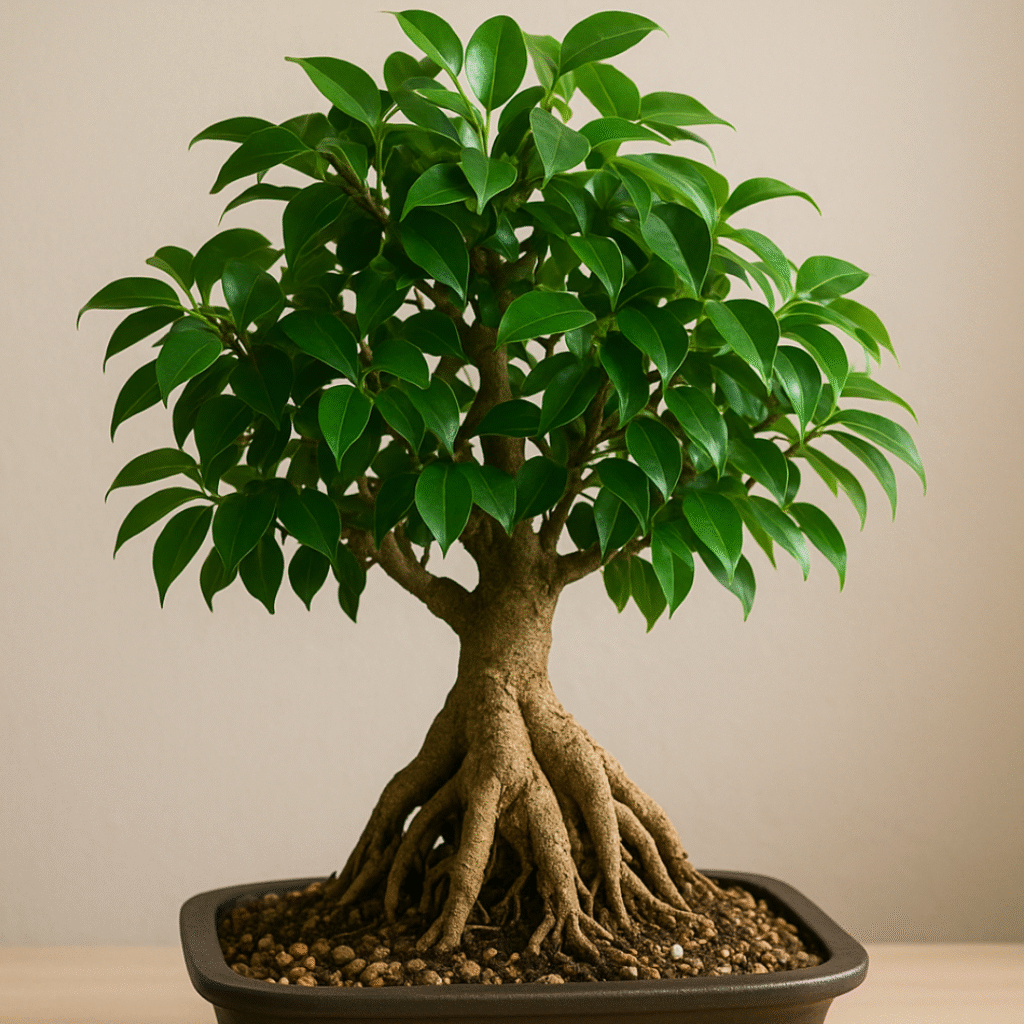
What Is a Ficus Bonsai?
The Ficus Bonsai is a miniature version of the regular Ficus tree, a member of the fig family (Moraceae). It’s one of the most popular bonsai species for beginners because it adapts well to indoor conditions and can handle a bit of neglect.
There are several varieties of Ficus used for bonsai, but the most common are:
Ficus Retusa – Known for its smooth bark and beautiful, curved trunk.
Ficus Microcarpa (Ginseng Ficus) – Famous for its thick, bulbous roots that resemble human legs or a bottle shape.
Ficus Benjamina (Weeping Fig) – Has slender branches and glossy leaves that droop gracefully.
These bonsai trees can live for decades with the right care — sometimes even longer than a human lifetime! That’s why they are often passed down through generations as living heirlooms.
Why Ficus Bonsai Is Perfect for Indoors
Unlike many bonsai trees that need full outdoor sunlight, the Ficus Bonsai can thrive indoors if you give it the right amount of light and humidity. Here’s why it’s great for your home:
Low maintenance: It doesn’t demand constant attention and forgives small mistakes.
Adaptable to light: It can grow in bright, indirect sunlight near windows.
Air-purifying: Ficus species are known to remove toxins and improve indoor air quality.
Compact and stylish: It adds a natural aesthetic to your living room, study, or workspace.
Symbolic value: In many cultures, bonsai trees represent harmony, patience, and balance.
So, even if you live in an apartment or a small space, a Ficus Bonsai can bring the outdoors inside — giving you a mini forest vibe in just a few inches of soil.
Light and Placement Tips
Light is one of the most important factors for Ficus Bonsai health. Ideally, it should get bright, indirect light for at least 5–6 hours a day.
Place it near a south or east-facing window where it can receive filtered sunlight.
Avoid harsh direct sunlight, especially in summer, as it can burn the leaves.
If your room is dim, you can use a grow light to supplement natural light.
Remember, the plant will grow towards the light source — so rotate it every few weeks to keep it balanced and evenly shaped.
Watering the Right Way
Watering is the trickiest part of bonsai care, but once you get it right, your Ficus will thrive beautifully.
Here’s a simple rule:
Water when the top inch of the soil feels slightly dry.
Use a watering can with a narrow spout and water slowly until it starts to drain out from the bottom holes.
Never let your bonsai sit in standing water — it can lead to root rot.
During summer, you may need to water every 2–3 days. In winter, once a week might be enough.
A good tip: Keep a small humidity tray filled with pebbles and water under the pot. It increases the moisture around the plant and helps it stay healthy in dry indoor air.
Soil and Fertilizer
Ficus Bonsai loves well-draining soil. A good bonsai mix usually contains:
Akadama (a type of clay granule),
Pumice, and
Lava rock or coarse sand.
This combination allows proper air circulation around the roots and prevents waterlogging.
For fertilizing:
Use a balanced liquid fertilizer (NPK 10-10-10) once every 2 weeks during the growing season (spring to early fall).
In winter, reduce feeding to once a month or stop feeding completely if growth slows.
Avoid over-fertilizing — a little goes a long way in bonsai care.
Pruning and Shaping
One of the most beautiful things about bonsai is that you shape it over time — like a living sculpture.
The Ficus Bonsai responds very well to pruning, which helps maintain its miniature size and structure.
Trim new shoots after they produce 6–8 leaves, leaving 2–3 leaves behind.
You can use bonsai wire to train branches gently into the desired shape.
Always prune during the growing season (spring or summer).
Regular pruning encourages finer branching and gives your bonsai that classic, balanced look.
Repotting Your Ficus Bonsai
Repotting is essential to keep your bonsai’s roots healthy. Do this every 2–3 years during spring.
Steps:
Gently remove the plant from its pot.
Trim about one-third of the roots (especially thick or circling ones).
Replant it in fresh bonsai soil.
Water thoroughly after repotting.
Repotting prevents the bonsai from becoming root-bound and helps the tree absorb nutrients efficiently.
Common Problems and How to Fix Them
Even though Ficus Bonsai is hardy, a few issues can pop up occasionally:
Yellow leaves: Usually caused by overwatering or lack of light.
Leaf drop: May happen when you move the plant to a new spot — don’t worry, it will adjust.
Pests (aphids, spider mites): Clean leaves with neem oil spray or wipe gently with a damp cloth.
Keep your bonsai clean and dust-free to prevent pest problems. Healthy leaves mean a happy bonsai.
Benefits of Keeping a Ficus Bonsai Indoors
The beauty of a Ficus Bonsai is more than just visual. It offers several emotional and physical benefits:
Purifies air by removing toxins like formaldehyde.
Reduces stress and boosts mindfulness — caring for a bonsai is a relaxing daily ritual.
Improves focus when placed on a work desk.
Adds positive vibes and natural energy to any space.
Inspires patience and creativity as you shape and nurture it.
Many people say that spending just a few minutes observing or pruning their bonsai helps them feel calm and centered.
Final Thoughts
The Ficus Bonsai isn’t just a plant — it’s a companion that grows with you. It teaches patience, creativity, and balance. Whether you’re decorating your home, office, or creating a vlog on indoor gardening, this little tree can become your favorite green friend.
With the right light, water, and love, your Ficus Bonsai will stay healthy for years, adding life and charm to your indoor world.
So, if you’ve been thinking of bringing home a bonsai, start with a Ficus. It’s beautiful, strong, and forgiving — just what every beginner (and plant lover) needs.
Yes, Ficus Bonsai grows very well indoors. It adapts easily to indoor light and humidity, making it one of the best bonsai trees for homes and offices.
Water when the top inch of soil feels slightly dry. Avoid overwatering, and ensure good drainage to prevent root rot.
Yes, it needs bright, indirect sunlight for 5–6 hours daily. Avoid harsh direct sun, especially in summer.
Provide adequate light, regular watering, and feed it with a balanced bonsai fertilizer every two weeks during the growing season.
Absolutely! It purifies air and creates a calming environment, making it great for bedrooms, study tables, or office desks.
Every 2–3 years in spring. This helps refresh the soil and keeps the roots healthy.t
Yellow leaves, leaf drop, and pests like spider mites can occur. Most issues are caused by overwatering or a lack of light.