Rubber Plant Care Guide: How to Grow a Healthy, Beautiful Ficus Elastica Indoors
The Rubber Plant, known scientifically as Ficus elastica, has become one of the most popular indoor plants for good reason. With its thick, glossy leaves and bold upright growth, it brings a touch of tropical elegance to any room. Even better, it’s surprisingly easy to care for once you understand its basic needs. Whether you’re new to houseplants or expanding your indoor jungle, the Rubber Plant is a rewarding choice that can grow into a stunning statement piece.
In this guide, you’ll learn everything you need to know to help your Rubber Plant thrive — from lighting and watering to pruning, repotting, and solving common problems.
Table of Contents
Light: Bright and Indirect Is Best
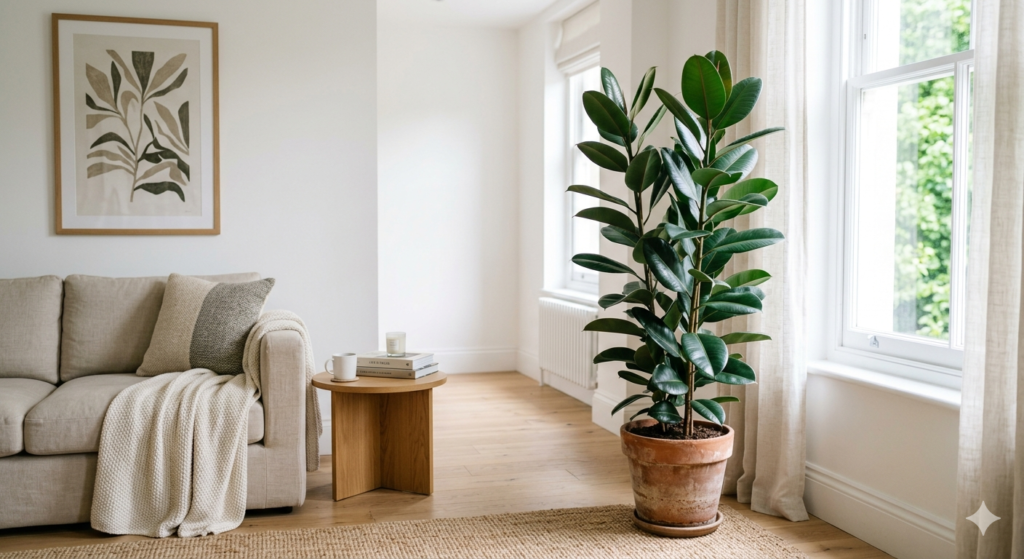
Rubber Plants love bright, indirect light, which mimics the filtered sunlight they receive in their native tropical forests. A spot near a window with sheer curtains or a location that gets bright ambient light throughout the day is ideal. If the plant receives too little light, it may grow slowly, drop leaves, or lose its rich color.
Direct sunlight can be a bit harsh, especially during the afternoon, and may cause leaf burn. Morning sun is usually gentle enough, but if you notice brown patches or fading, move the plant slightly farther from the window. Good lighting is the key to strong, healthy growth and larger leaves.
Watering: Keep It Consistent but Not Soggy
One of the most common mistakes with Rubber Plants is overwatering. These plants prefer their soil to dry out slightly between waterings. A good rule is to water when the top inch or two of soil feels dry to the touch. When you do water, soak the soil thoroughly until water drains from the bottom of the pot, then empty the saucer so the roots don’t sit in moisture.
During winter, when the plant grows more slowly, it will need less water. Overwatering can lead to yellow leaves, root rot, and mushy stems, while underwatering may cause the edges of the leaves to turn brown or crispy. Finding a consistent rhythm that matches your home’s temperature and humidity will keep your plant happy.
Temperature & Humidity: Warm and Stable
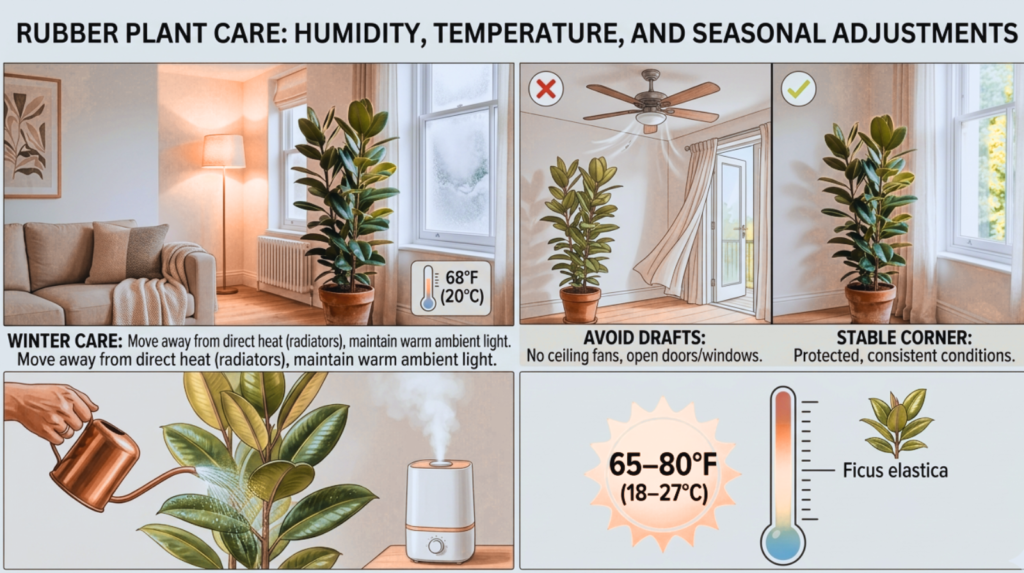
Rubber Plants thrive in warm, stable environments. They prefer temperatures between 65–80°F, which makes them perfect for most homes. What they don’t appreciate is sudden temperature changes. Keep them away from drafty doors, air conditioners, or heating vents, as these can stress the plant and cause leaf drop.
Humidity is another factor to consider. While Rubber Plants tolerate average indoor humidity, they do appreciate a little extra moisture in the air. If your home is very dry, especially in winter, occasional misting or placing a humidifier nearby can help keep the leaves looking their best.
Soil & Repotting: Give the Roots Room to Grow
A well‑draining potting mix is essential for Rubber Plants. A blend designed for indoor tropical plants works well, especially one that includes perlite or bark to improve drainage. These plants grow quickly when they’re happy, so expect to repot every one to two years.
Signs your Rubber Plant needs a bigger pot include roots circling the bottom, soil drying out very quickly, or slowed growth despite good care. When repotting, choose a pot only one size larger. Too much extra soil can hold excess moisture, increasing the risk of root rot.
Pruning & Shaping: Create the Look You Want
Rubber Plants are incredibly versatile when it comes to shaping. If you want a tall, tree‑like plant, allow the main stem to grow upward and prune sparingly. If you prefer a fuller, bushier look, prune the top growth to encourage branching.
Pruning is best done in spring or summer when the plant is actively growing. Use clean, sharp shears and make cuts just above a leaf node. You may notice a milky sap when pruning — this is normal, but it’s a good idea to wipe it away gently.
Regularly wiping the leaves with a damp cloth also helps the plant absorb more light and keeps it looking vibrant.
Pet Safety: Keep Out of Reach
Rubber Plants are considered toxic to pets if ingested. If you have curious cats or dogs, place the plant somewhere they can’t easily reach or choose a pet‑safe alternative. The sap can also irritate skin, so wash your hands after pruning or handling damaged leaves.
Troubleshooting: Common Problems and Solutions
Even with good care, you may run into a few issues. Here’s how to handle them:
Yellow leaves: Usually a sign of overwatering. Allow the soil to dry more between waterings.
Brown leaf edges: Often caused by low humidity or underwatering. Increase humidity and check your watering routine.
Leaf drop: Can happen from low light, drafts, or sudden changes in environment. Move the plant to a brighter, more stable location.
Sticky residue: This may be sap or a sign of pests like scale. Wipe the leaves and inspect the plant closely.
Rubber Plants are resilient, so most problems can be corrected with a few simple adjustments.
Final Thoughts
The Rubber Plant is a stunning, low‑maintenance houseplant that brings life and style to any space. With the right balance of light, water, and warmth, it can grow into a beautiful, long‑lasting centerpiece in your home. Whether you’re decorating a modern apartment or building a lush indoor garden, this plant is a timeless choice that rewards you with steady, impressive growth.
Rubber Plant FAQ
Yes, Rubber Plants are considered low‑maintenance. They need bright, indirect light, moderate watering, and occasional cleaning of their leaves.
Water when the top 1–2 inches of soil feel dry. Overwatering is the most common issue, so let the soil dry slightly between waterings.
No. They prefer bright, indirect light. Direct afternoon sun can burn their leaves.
Rubber Plants are toxic to cats and dogs if ingested. Keep them out of reach of pets.
Yellow leaves usually mean overwatering. Allow the soil to dry more and check that the pot has good drainage.
Indoors, they can grow 6–10 feet tall or more with proper care. Regular pruning helps control size and shape.
It can survive in low light, but growth will be slower and leaves may drop. For best results, place it in bright, indirect light.
Occasional misting helps in dry climates, but it’s not required. A humidifier or pebble tray can also boost humidity.